Voice and music theory · online or in person
Voice and music theory lessons.
Sixty years of music, one student at a time.
Private lessons with Becky Oexler, online over Zoom or in person at her studio in Jackson, Michigan. Students ages 9 to 75, beginners through performers, anywhere you have a connection.
What lessons cover
Voice and music theory.
Two things, taught properly, for people who want to actually get somewhere with them.
- Finding your range and knowing where it ends
- Placement, so the sound sits where it should
- Breath that lasts through the phrase
- Head voice, mixed voice and the break between them
- Repertoire that builds the voice instead of straining it
- Reading music, starting with the melody line
- Rhythm you can count and keep
- Keys, and how to find the one your voice lives in
- Singing harmony against another part
- Theory aimed at singers, not at a textbook
Lessons run over Zoom, or in person at her studio in Jackson, Michigan. For online lessons, headphones make a real difference and I will help you set your audio up on the first call.
Payment: Cash App for online lessons. Cash App, cash or check in person.
MUSIC LESSONS, ASKED AND ANSWERED
Frequently Asked Questions
ABOUT VOICE AND MUSIC THEORY
Sixty years of working music and a lifetime of teaching. These are the questions that come up the most.
FILTER BY SUBJECT
Why does my throat hurt when I sing?
Throat pain when you sing comes from one of two places, and only one of them is your singing.
The first is technique. Usually that means notes outside your range, sung in a way your voice cannot support yet, and there are several physical reasons a voice ends up doing that. The second has nothing to do with technique at all. A cold, a sore throat, drainage, or the kind of damage you did to yourself yelling at a concert or a basketball game the night before. That one people forget about, and then they blame their singing for something their voice was already carrying.
Which of the two it is changes everything about what you do next, and that is worth sorting out before you keep singing on it.
throat hurts sore throat after singing scratchy raw burning hoarse voice tired singing from my throat throat pain strain pushing yelling drainage cold sick vocal fatigue
Why can't I hit high notes?
Before you can work on a high note you have to know where your range actually ends.
An alto is not going to hit what a soprano hits. A mezzo is not either, and a soprano is not going to reach down and do what an alto does. Same on the other side with tenor, baritone and bass. There is a crossover where you can be two of them at once, alto and mezzo for instance. Once the range is established, you can see what is missing. A note that speaks one day and not the next usually means you have not developed the pocket in the head cavity to sustain that sound yet.
With the right exercises you can hit those notes. Every note you add to a voice takes time, and how much depends on the voice.
high notes cant sing high hit high notes belting sing higher range top notes cracking straining soprano alto mezzo tenor baritone bass head voice extend range
Why does my voice shake when I hold a note?
Most of the time that shake is your own vibrato, and it sounds much bigger from the inside than it does to anyone listening.
Vibrato is natural. It arrives on its own once a voice is free, and singers who have never heard themselves closely often think something has gone wrong. Nerves can add to it. The other possibility is that you are parked in a crack place, sitting right between two notes at your break, which is the passaggio, and a voice will wobble there until it knows how to cross.
Telling those apart takes someone listening to it, and the answer changes what you would practice.
voice shakes wobble shaky voice trembling vibrato natural vibrato wavering unsteady holding a note long notes nervous break passaggio
Why do I run out of breath when I sing?
Running out of air almost always means the breath is coming from the wrong place.
A real breath goes to the bottom of your stomach. It feels like it is coming right out the other side of you, and when you push, you can feel your back expand. Most people never breathe that way because nobody showed them, so they fill the top of the chest, get about half of what they need, and then run dry in the middle of the phrase. There are exercises that put the breath where it belongs, and once you have it, you can sing anything, as long as you want.
That is the part that changes fastest in lessons, and it changes more than singing.
out of breath breath support breathing diaphragm belly breathing cant hold a note gasping short of air phrases long phrases breath control
Why do I sound nasal when I sing?
Nasal singing is a placement problem. The sound is going into the nose instead of filling the whole mask.
What usually causes it is the soft palate. The back of your tongue rises up and covers it, and with the space closed off, everything gets shoved upward into the nose. The tone has nowhere else to go. It is hard to explain in words and very easy to hear the moment it changes, which is why it is one of the quicker things to fix in person.
That is one cause. There are others, and yours depends on what your tongue and palate are doing.
nasal nasally sing through my nose honky whiny twangy placement soft palate tongue mask resonance stuffy tone
Do singers need to know music theory?
If you want a career in this, absolutely yes.
Musical theater, opera, writing your own music, pop. All of it goes faster and further when you know what you are looking at. The more theory you know, the more quickly you get through everything, singing and playing both. Singers who avoid theory end up depending on someone else to tell them what the music says, and that gets expensive in rehearsal time and in opportunities that go to the person who could read the chart.
How much you need depends on what you want music to do for you, and that is worth deciding early.
music theory for singers do i need theory theory lessons chords keys scales reading learn theory singer musician career
What key should I sing in?
Your key comes out of your range. It is not a property of the song.
Establish your range first, and understand that it is where you are starting, not where you will stay. Then look at the music and find the highest note in it. That note should never exceed your range. If it does, the song gets moved to a key where it does not, which is what transposing is for. Singing a song in the key it happens to be printed in, when that key does not fit you, is how people end up straining every time they perform.
Your range grows, and the keys available to you grow with it.
what key should i sing in right key for my voice transpose transposing key change too high too low karaoke key find my key range
How do I sing harmony?
Harmony starts with being able to sing a line back exactly the way you heard it.
Learn a melody first and keep it on a loop so you can repeat it. Call and response. Somebody sings the phrase, you sing it back. Once you can return a line accurately, you are ready to hear a second line against it. Then the teacher stops singing with you and plays the melody on an instrument instead, because if somebody sings the other part at you, you will drift onto theirs without noticing. You hold your line against what is played. Then the other voice comes in over the top.
It is a long process and it absolutely works. People have done it many times.
harmony singing harmony second part hold my part parts harmonize backup vocals blend ear training call and response
Why can't I stay on the beat?
A beat has two halves. The number, and the and.
Tap your foot. The foot coming down is the number, one, two, three. Every one of those has an and, which is the upbeat, and that is your toe lifting straight up before the foot comes squarely back down on the next number. Most people who cannot stay in rhythm are only counting the numbers, so half the beat is invisible to them. Once you can feel the and, you clap the rhythm with it in there. The and is the miracle cure.
Once it is in your body it stops being something you think about, and that is the goal.
cant stay on beat off beat rhythm timing counting downbeat upbeat and tempo clapping rushing dragging metronome
Do I need to read music to take voice lessons?
Not to start. It depends entirely on what you want music to do for you.
If you want to take it seriously, perform well, do solo work, do more than sing in a choir, then yes, you need to learn to read. You might only ever need the melody line, but you need to read it and be able to play it. The other way works for a lot of people. You learn the song from a recording, either I play it for you or you find it on YouTube, and then you sing along to a karaoke track in the key we have been working in, which teaches rhythm quite well. And if you are doing this for the joy of it and reading holds no interest, you can follow Mitch Miller's bouncing ball and have a wonderful time.
Both roads work. Which one you take is a decision, not a requirement.
read music sheet music note reading sight reading melody line learn by ear karaoke youtube do i need to read music
How much do voice lessons cost?
Mine are $35 for a half hour and $50 for a full hour.
Voice lessons range wildly, from about $10 a half hour up past $100, and the price usually tracks what the teacher has behind them. With sixty years of working music and a music education degree I could sit at the top of that range. I would rather be reachable. The hour is the better value of the two and it is also the better lesson, because a voice needs time to warm up before the real work starts.
What you need depends on where you are starting, and we can sort that out before you book anything.
voice lesson cost price how much singing lessons rates per hour half hour cheap expensive affordable jackson michigan online
Can you really learn to sing over Zoom?
Yes, and the settings matter more than the camera does.
Zoom is built for talking, so out of the box its noise cancellation flattens the very things a voice teacher needs to hear. Turn that off and the full range comes through. Headphones clear up the rest, and I have watched students go from muddy to perfectly workable the moment they put a pair on. From there it is ordinary teaching. Students who start out weak get more comfortable, they try what I ask them to try, and their range widens, their voice strengthens, and they start singing like someone who believes it.
I will help you get your audio right on the first call. It takes about five minutes.
zoom lessons online singing lessons virtual lessons does it work remote lessons audio settings noise cancellation headphones lag internet
What happens in a first voice lesson?
The first lesson is mostly finding out where your voice actually sits.
Most students who come to me online are beginner to intermediate. Some are performers wanting to sing something better than they currently do, and the rest simply want to learn to sing. Either way we start with range, what kind of voice you have, alto, soprano, tenor, baritone, bass. Then placement, with exercises that let you feel where the sound is supposed to sit, so you know what I am asking for. Then we look at material, some of it what you want to sing, some of it what I want you singing to build the voice up and extend the range.
You will leave the first one knowing something about your voice you did not know that morning.
first lesson what to expect trial lesson beginner lesson intro range check placement exercises nervous first time
How young can kids start voice lessons?
Nine is the age where it usually starts working.
I have taught them younger. Seven is the youngest I have taken, and it can go fine, but attention is the whole problem and online makes it harder. Nine seems to be the magic age. They can hold their focus, they follow the instruction, they practice between lessons, they take it seriously, and they stay present for the entire lesson instead of twirling off into a corner to wonder where the milk and cookies went.
Children vary, and some are ready earlier. A conversation tells you more than a birthday does.
kids voice lessons children singing lessons age what age how young child 7 8 9 10 attention span safe for kids
Do I need to be able to sing already to take lessons?
No. A great many people can sing and do not believe it yet.
Often what is missing is not the voice, it is listening. The note is there to be heard and the singer has not learned to hear it, so it never arrives. That is teachable. I take my time about it, and I am patient waiting for you to arrive at the notes you want to sing, the ones you actually do hear.
Where you start has very little to do with where you can end up.
cant sing tone deaf bad singer beginner never sang can anyone learn to sing gift talent tune pitch
Didn't find it? Ask me directly.
becky@lessonswithbecky.comWho you would be working with
I could do it my way.
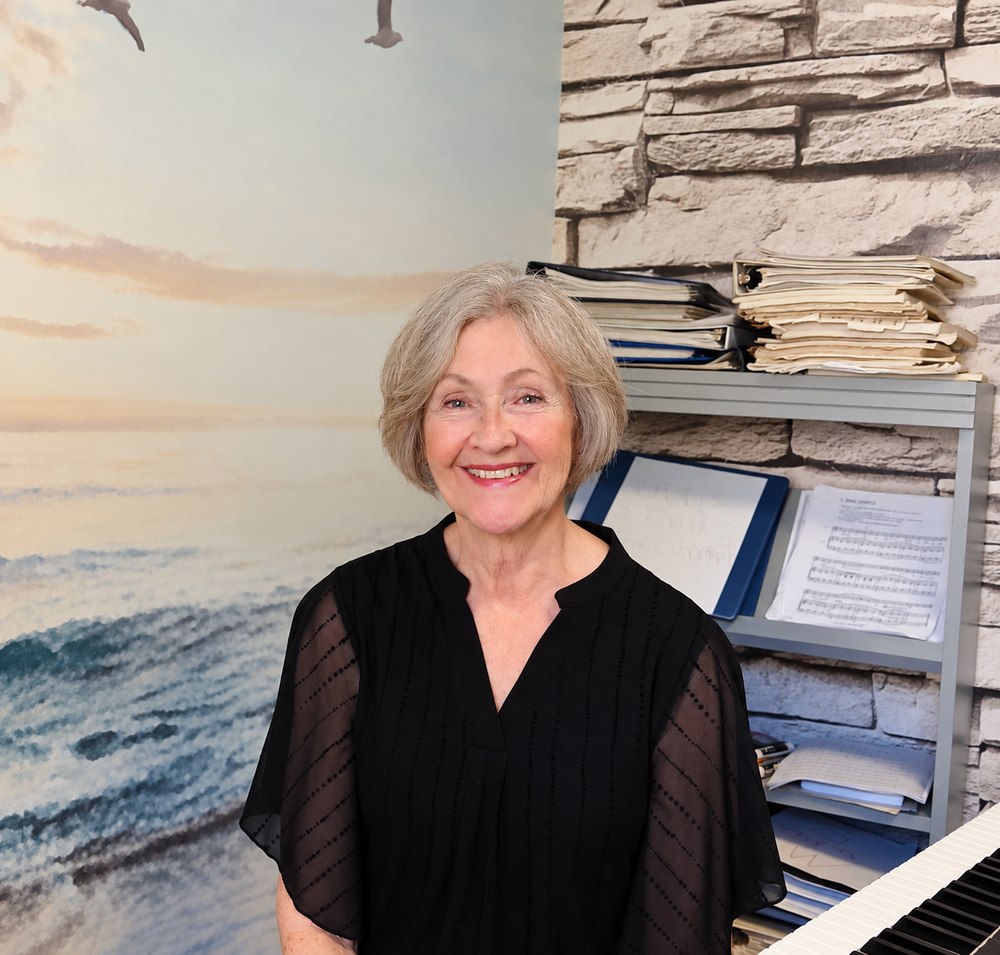
I found in my teenage years that I loved teaching privately. Horse training, junior choir, and it stuck. After I got the teaching degree and taught in schools, it was fun, but it was so much more fun when I developed my own music curriculum, K through 12, and used it with homeschool students. I could do it my way, with the materials I always wanted to use instead of whatever the school had.
That is what made me say I can do this individually and give all those tools to my students. It is fun to watch them grow. It excites me to see and hear my students reach their goals.
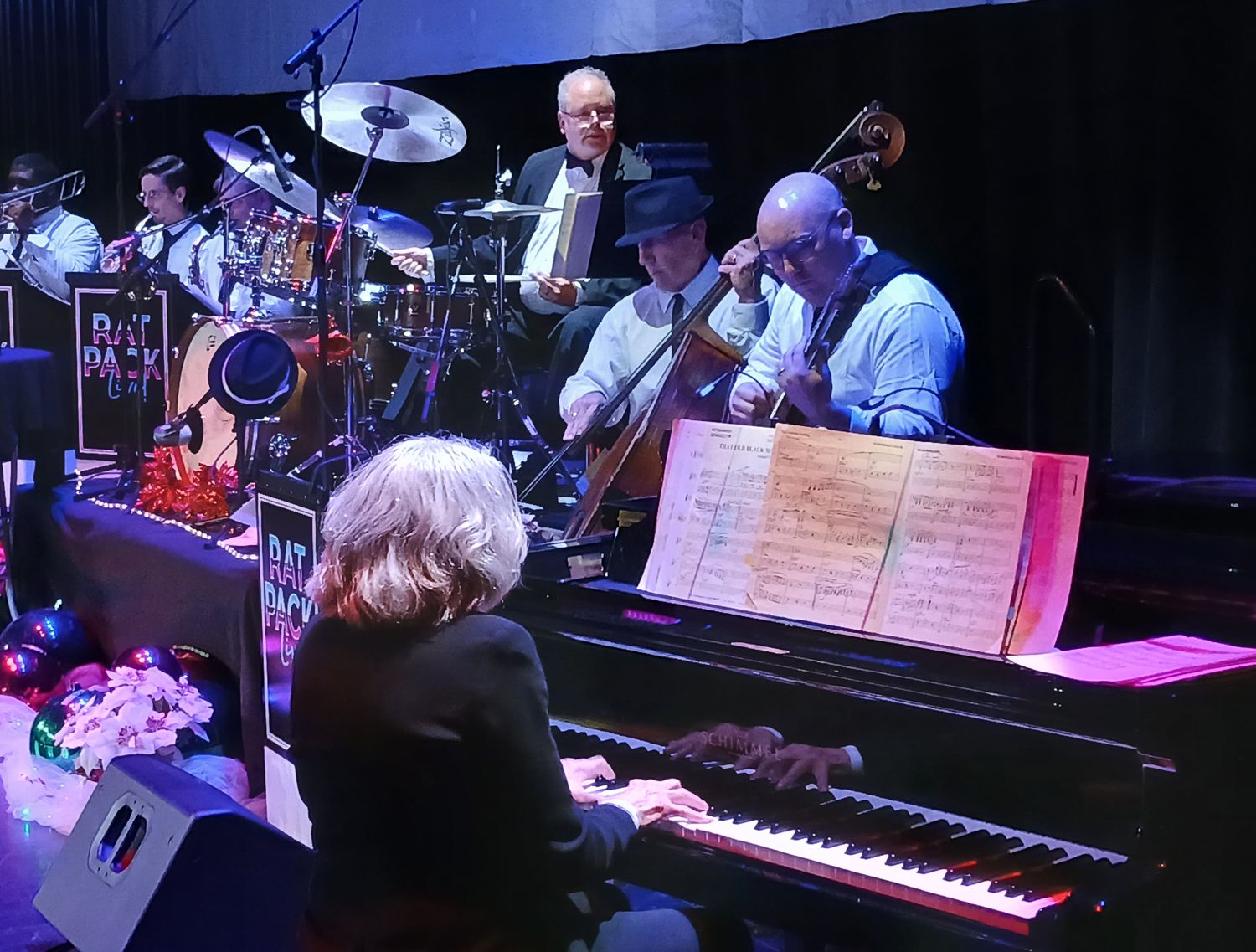
I teach from Jackson, Michigan, over Zoom, which means a student in Jackson and a student three states away get the same lesson. I have been a paid musician since I was eleven. I hold a Bachelor of Music Education from Aquinas College with an emphasis in choral and instrumental conducting, and I have spent my working life as an organist, pianist, vocal director and music director. I have directed chancel choirs, children's choirs, handbells, praise bands and musical theater productions, and I have taught privately the entire time.
It is fun to watch them grow.
Listen
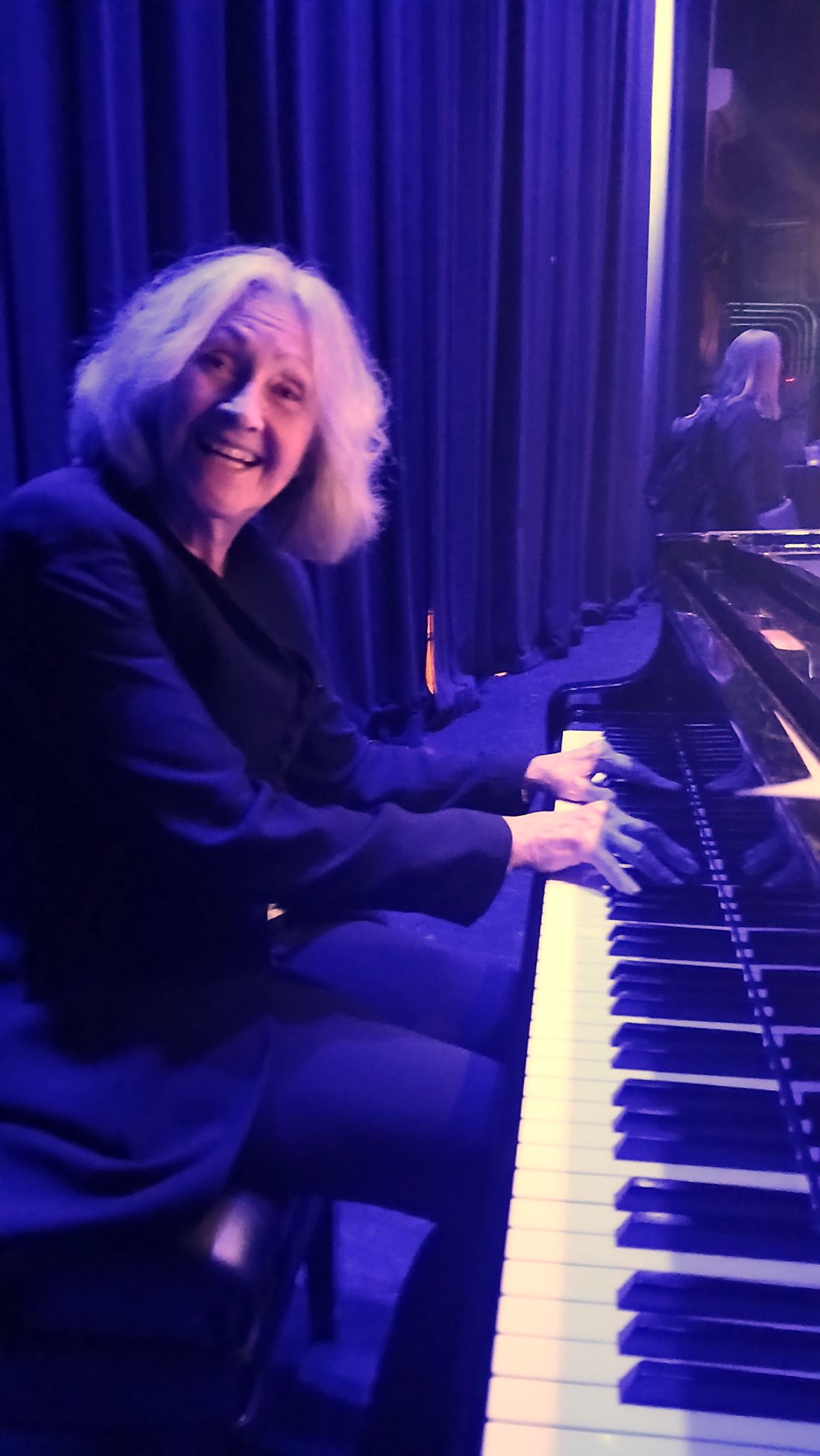
Two lessons and a song.
Testimonials
What students and parents say.
“My son has been taking lessons with Becky for about five years. His vocal range and breath control has grown beautifully. He’s auditioning for musical leads and earning division 1 ratings in solo and ensembles. We are so lucky to have found Becky.”
Holly M., parent“My daughter began vocal training with Becky in 2021 at the age of nine, having no prior experience. Under Becky’s guidance and encouragement, she gained the confidence to audition for a role, first as part of the ensemble and later securing a leading role. Becky’s enthusiasm and skillful coaching helped my daughter develop her vocal abilities and stage presence, fostering both her self-assurance and love for performing.”
Mirian P., parent“I searched out Becky when my kids wanted to sing, but I was pretty confident they didn’t have voices and couldn’t sing. Clara was so excited, not only did she have a voice but she could sing. They see the great difference in teaching styles. Clara would now like to teach music and pass on her passion. Warren now sings solos when he can.”
Michelle F., parent“My daughter has been taking lessons from Becky for three years. Her abilities in singing have skyrocketed. We absolutely love Becky.”
Angela H., parentContact
Start with a message.
Lessons only. Tell me where your voice is now and what you would like it doing, and I will tell you honestly whether I can help.
Voice and music theory for students ages 9 to 75. Online over Zoom, or in person at her studio in Jackson, Michigan.
becky@lessonswithbecky.comLesson hours: 1:00 to 9:00 PM Eastern, Sunday through Friday. Saturday off.
Your email address is used to answer you and nothing else. No list, no sharing, no newsletters.
- Send a message with what you are working on.
- We pick a time and I help you set your audio up.
- First lesson finds your range and your placement.
- We go from there, at the pace your voice takes.